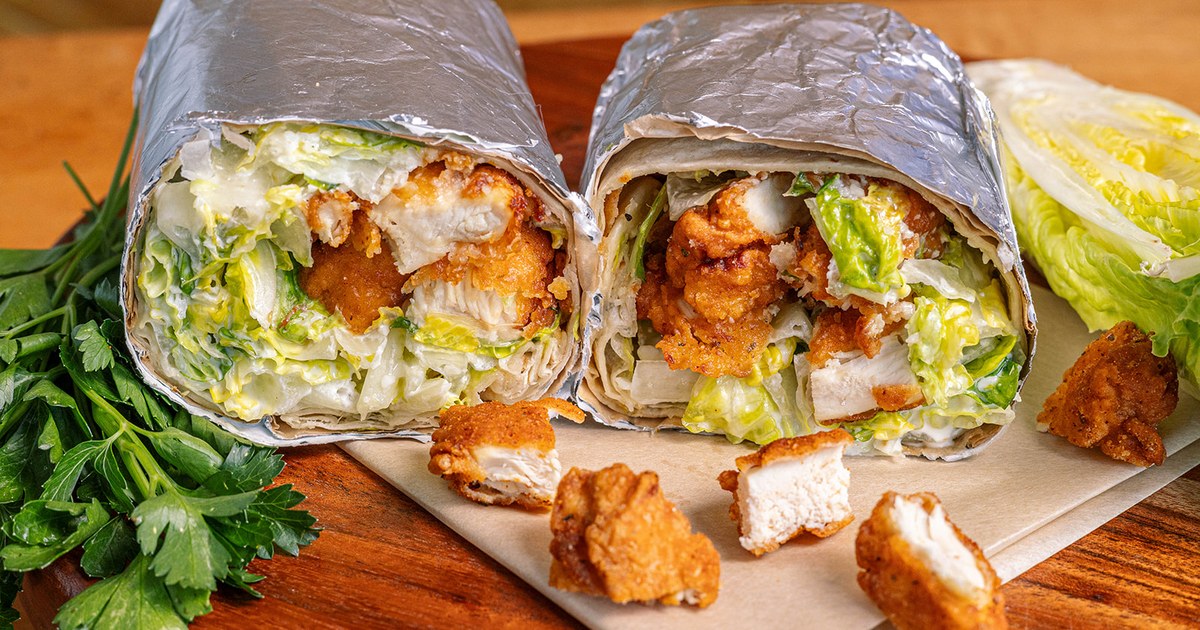
You know the drill. You bite into a chain chicken sandwich and it's lukewarm. The breading slides off in one rubbery sheet. The chicken inside tastes like it came out of a bag. Because it did.
Now bite into a hand-breaded sandwich made to order. The crust shatters. The chicken's juicy. The sauce soaks into the ridges instead of pooling on top. You hear it before you taste it.
That's not marketing. That's physics.
This guide breaks down exactly why hand-breaded chicken sandwiches taste better than the frozen pre-fab versions chains serve. You'll understand the science, spot the shortcuts, and know what to look for when you're deciding where to spend your lunch money.
What "Hand-Breaded" Actually Means (and What It Doesn't)
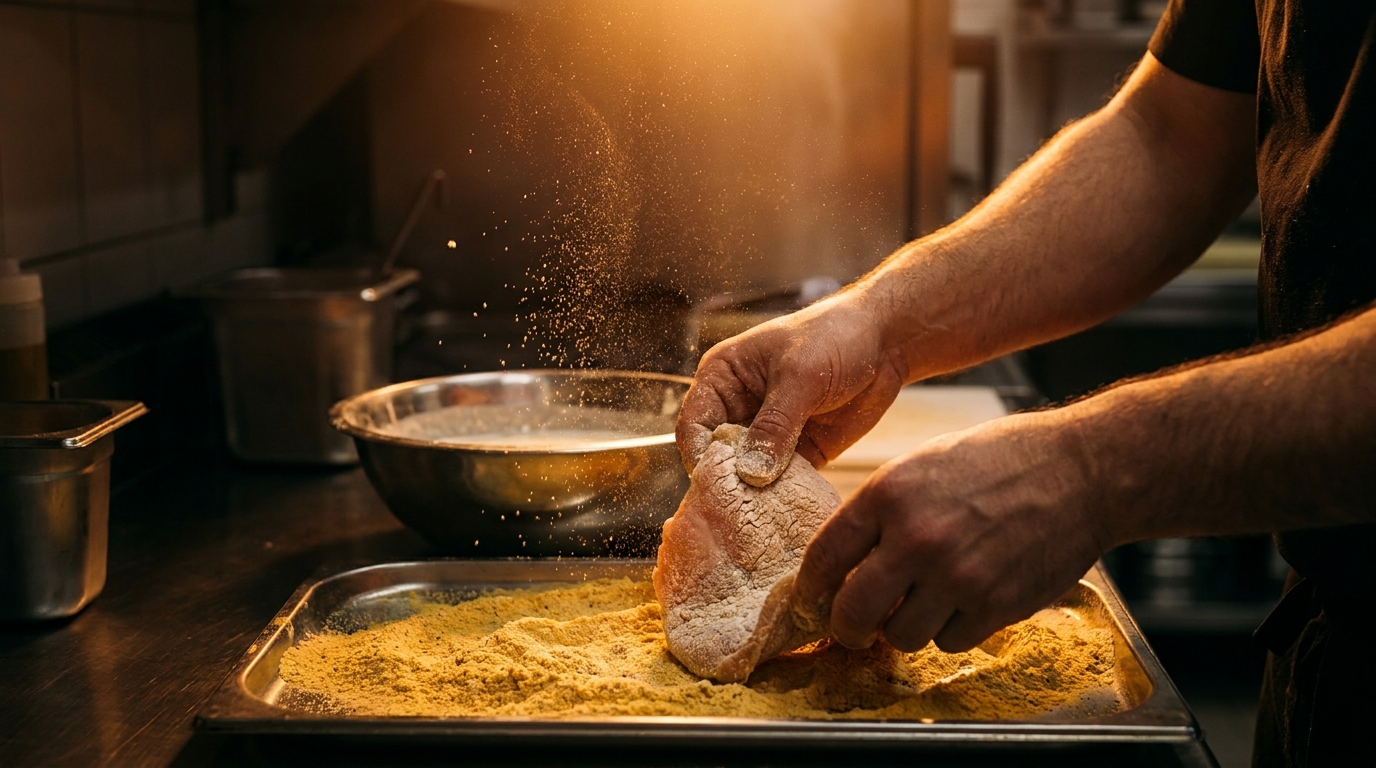
Hand-breaded means raw chicken dipped in buttermilk, dredged in seasoned flour, and fried fresh. No freezer. No assembly line. No heat lamp holding period. The chicken goes from breading station to fryer to your hand in minutes.
Pre-breaded frozen is the opposite. The chicken's breaded in a factory, flash-frozen, shipped frozen, stored frozen, then reheated in-store. Fresh breading adheres to raw chicken through chemistry (proteins in the egg wash bond with starches in the flour). Frozen breading is mechanically pressed onto pre-cooked or par-cooked chicken. When you bite it, you taste the difference between adhesion and compression.
At Buzz Bird, we start with raw chicken breast. Every cutlet is hand-breaded the second the order comes in. Buttermilk soak, seasoned-flour dredge, straight into the fryer. No shortcuts.
If a menu doesn't explicitly say "hand-breaded" or "breaded to order," assume it's not. "Hand-crafted" and "made fresh" are often carefully worded to imply hand-breading without actually promising it.
The Three-Station Process: Buttermilk, Flour, Fryer
Real hand-breaded kitchens run three stations:
- Buttermilk bath. The chicken soaks for at least 20 minutes. The acidity tenderizes the meat and creates a sticky surface for the flour to grab.
- Seasoned flour. Not breadcrumbs, not panko — flour mixed with salt, pepper, cayenne, paprika, garlic powder. The chicken is dredged, pressed gently, then rested 30 seconds so the coating hydrates and forms a paste that won't slide off in the oil.
- The fryer. 350°F. The batter puffs and crisps in under 8 minutes, coming out porous and ready to soak up sauce.
The timing between stations matters as much as the ingredients. Let the flour-coated chicken sit too long and it gets gummy; rush it into the fryer before it hydrates and the breading slides off. Chains can't replicate this at scale because it requires human judgment at every step, and a reheating protocol can't make micro-adjustments the way a skilled line cook can
The Science of Texture: Why Irregular Breading Beats Uniform Coating
Hand-breaded chicken looks messy thicker in some spots, thinner in others. That's not a flaw, it's the feature. Irregular breading creates more surface area, which means more contact with the oil and more Maillard reaction: the chemical process that turns starches and proteins golden-brown and produces that savory, nutty fried flavor.
Pre-breaded frozen chicken is machine-pressed flat, so every piece crisps the same way — evenly, but with no contrast. Food scientists call the ideal texture "shatter crust": coating that breaks apart in shards rather than peeling off in sheets. You only get shatter from irregular adhesion. Factory rollers can't produce it, because consistent pressure creates consistent (read: monotonous) thickness and texture.
Flavor: Fresh Breading Absorbs Sauce and Seasoning Better
Fresh breading is porous. Right out of the fryer, it's full of microscopic air pockets where water evaporated during frying — flavor sponges. Pour hot honey or buffalo sauce over hand-breaded chicken and it soaks into the ridges instead of sitting on top. At Buzz Bird, we sauce sandwiches the second they leave the fryer, while the breading's still breathing. Wait five minutes and the window closes.
Frozen pre-breaded chicken can't do this. As the USDA explains, water expands when it freezes, and sharp-edged ice crystals rupture the surrounding cells. When the chicken's reheated, those ruptured cells collapse into a denser, less absorbent surface so sauce pools on top or drips off instead of integrating into the bite. The same goes for dry seasoning: fresh breading has mechanical grip that grabs onto spices, while breading that's been through temperature changes develops a slick exterior that seasoning bounces off.
The Shortcuts Chains Take (and Why They Have To)
Chains aren't evil — they're optimized for a different outcome. A brand with 2,000+ locations needs chicken that ships nationally, survives weeks in a freezer, and reheats consistently in 30 seconds, not 8 minutes.
By the time that chicken reaches your tray, it's been through four temperature changes: frozen, thawed, reheated, held warm. Each transition degrades texture. So chains engineer around it — adding binders to hold the breading together through freeze-thaw cycles, injecting salt-water solution to compensate for moisture loss, and designing bolder sauces to mask what the texture can't deliver. It works, in the sense that it's consistent. But consistency isn't craft, and reliable isn't exceptional.
The Heat Lamp Problem: Why Chain Sandwiches Lose Crunch in Minutes
Fried chicken's worst enemy is steam. As the chicken cools, moisture turns to steam, condenses inside the breading, and makes the crust soggy. Chains hold cutlets under heat lamps between orders — within 10 minutes, crispy goes limp. The heat lamp also keeps cooking the chicken, overcooking the exterior while the inside stays tender, and burns off the aromatic compounds that make fried food smell (and taste) fresh.
Hand-breaded spots avoid this because nothing gets held. If you order a Buzz Bird sandwich and it's not crackling when you unwrap it, something went wrong.
What to Look for in a Real Hand-Breaded Chicken Sandwich
You can spot the real thing in five seconds:
- Irregular breading, no two pieces look identical, with visible clumps and ridges
- Golden-brown variance, light and dark patches, not a uniform tan
- Visible seasoning flecks embedded in the crust, not sprinkled on top
- The sandwich is hot, just-out-of-the-fryer hot, not heat-lamp warm
- The breading doesn't slide off when you bite, good adhesion means it was applied to raw chicken
There's also an audio test: hand-breaded chicken cracks before it crunches. And check the wrapper, grease spots are fine, loose breading debris means mechanical failure. You don't need to trust the menu description. The sandwich itself will tell you the truth.
How Buzz Bird Does It: From Raw Cutlet to Your Hand in 8 Minutes
We built Buzz Bird around one non-negotiable: no freezer in the building. Every morning, we portion fresh chicken breast and let it sit in buttermilk until an order comes in. Then: seasoned-flour dredge, straight into the fryer at 350°F for 7 minutes, sauced immediately — hot honey for The Buzz Bird, buffalo for the Bad Mutha Clucka, Ya-Ya sauce for the Kung Fu Crunch — while the crust is still breathing.
Three brothers opened Buzz Bird because we were tired of chain chicken that tasted like it came out of a bag. We tested a frozen-backup model during our soft opening; it sat unused for three weeks, so we pulled the freezer and converted the space to dry storage. Without a freezer, we can't cut corners or prep ahead — every operational decision reinforces freshness because there's no backup plan.
We also use full-fat buttermilk from a regional dairy instead of the cheaper cultured versions, and our flour blend (a 60/40 mix of all-purpose and rice flour, seasoned with salt, pepper, cayenne, paprika, garlic powder, and a touch of MSG for umami depth) took six months to dial in. Read more on our story page.
The Crispy Truth
Hand-breaded chicken sandwiches taste better because they're fresh, irregular, absorbent, and cooked to order. Chains serve a purpose — fast, cheap, ubiquitous — but when you care about the sandwich, pre-breaded frozen chicken can't compete. You can't engineer shatter crust in a factory. You have to make it by hand, one order at a time.
Taste the difference yourself. Stop by Buzz Bird in Brick, NJ or order online. We'll have your hand-breaded sandwich crackling fresh in 8 minutes.
Ready to taste real hand-breaded chicken?Order from Buzz Bird today and experience the difference fresh craft makes. Every sandwich made to order, never frozen, always crackling.